
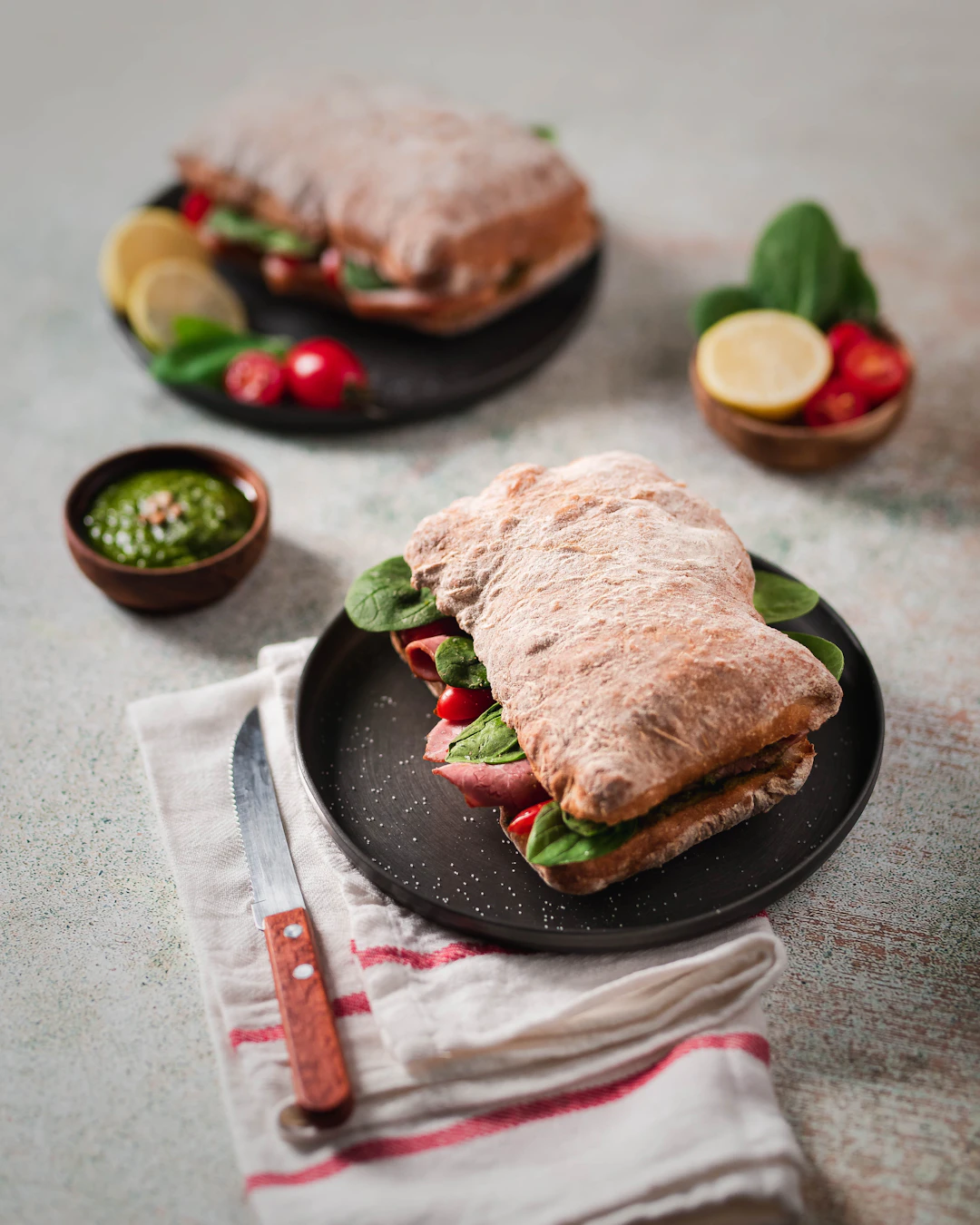
Revised 18 October 2026; first published 2024-11-21. Original byline and URL retained.
Wheat ciabatta contains gluten. A lower measured amount of one component in selected bread samples would not make the loaf gluten-free or establish a digestive benefit.
Ciabatta and wheat gluten
Ciabatta made with wheat flour contains gluten. Stretching, folding, poolish, or a long rise does not make an ordinary wheat loaf gluten-free. Some specialist studies use selected cultures, enzymes, and controlled fermentation to change gluten levels, but those methods are not the same as a conventional ciabatta formula. People with coeliac disease need a gluten-free diet; they should follow guidance from their clinician or dietitian.
Bread composition varies. A comparison of 48 breads sold in Spain found lower average gluten but higher average fructans in the sampled long-fermented artisan breads than in the sampled short-fermented supermarket breads. The study measured those products; it did not test this particular loaf or establish a health effect.
Baking note
In a dough, hydration means the water amount relative to flour by weight. Folds can help organize and strengthen a wet dough so it can retain fermentation gas. They describe a handling method, not a measure of gluten or a health outcome.