
Revised 18 October 2026; first published 2024-12-23. Original byline and URL retained.
No single fold or handling step is established here as a way to lower fructans. That question requires a measured recipe-specific analysis.
Fructans are not gluten
Fructans are fermentable carbohydrates found in wheat; gluten is a group of wheat proteins. They are different components. Fermentation can change fructan levels, but the result depends on the flour, organisms, recipe, and time. Folding develops dough structure; it does not by itself establish that fructans have been reduced.
Studies report different results for different breads. One small pilot compared a particular long-fermented sourdough wheat bread with a short-process yeast bread and measured a lower fructan level in the study sourdough. A market survey of 48 Spanish breads found higher average fructans in its long-fermented artisan sample group. Neither result identifies the fructan level of a Ciabatta.co.za loaf or proves a digestive effect.
What a baker can observe
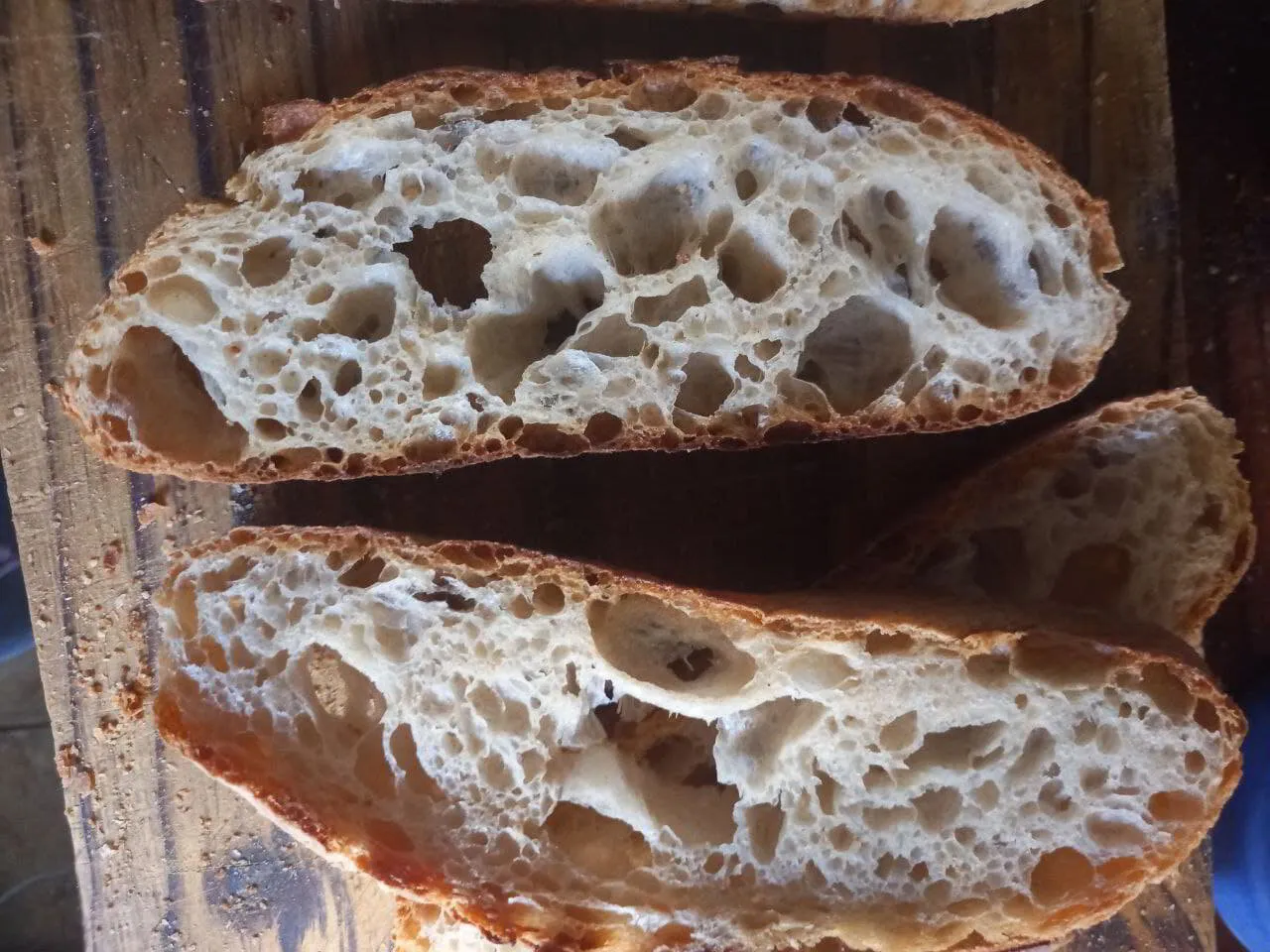
The baker can record flour, preferment, fermentation temperature and time, dough handling, and loaf structure. A claim about a particular bread’s fructan content would require testing that bread with a suitable analytical method.